The Direction

August 2025
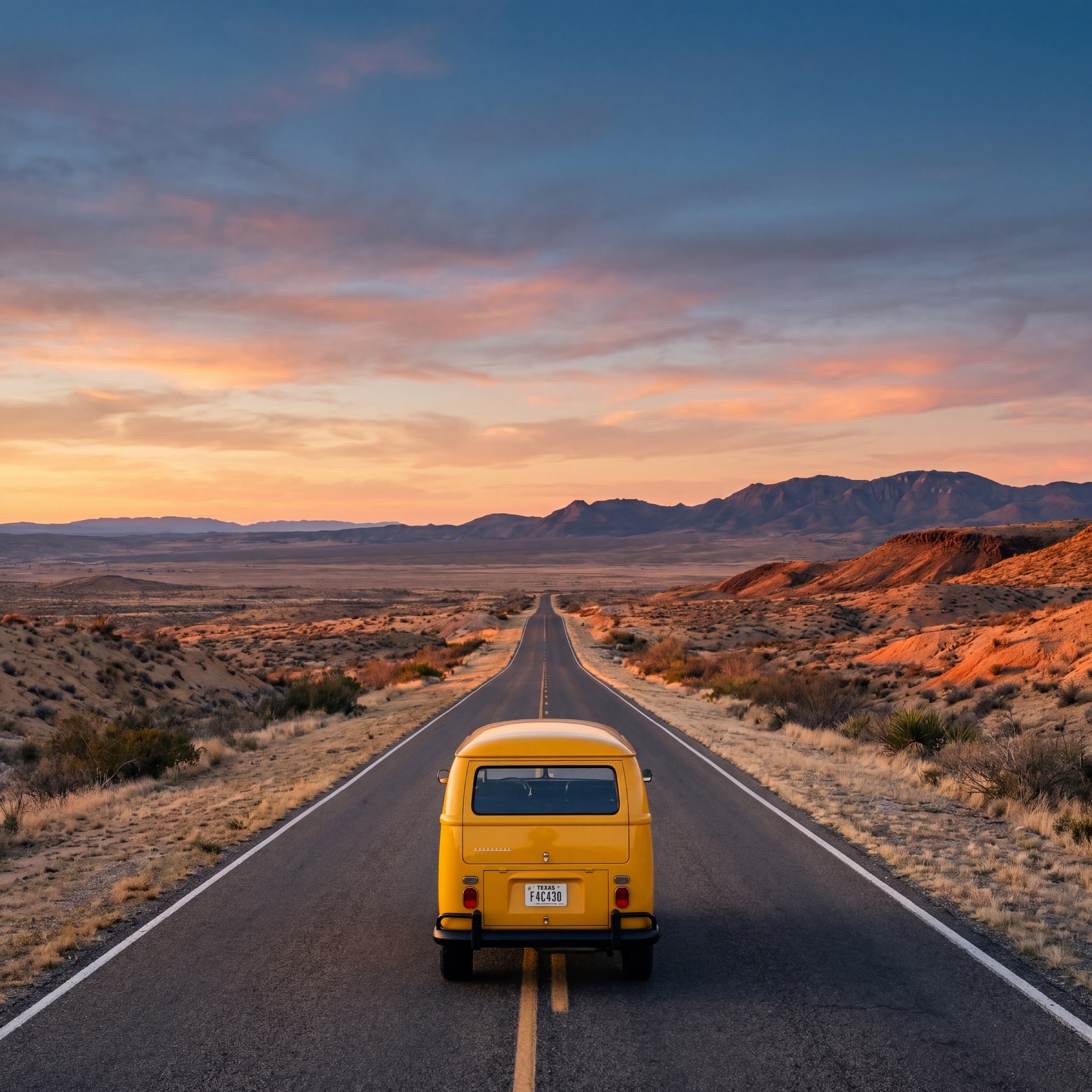
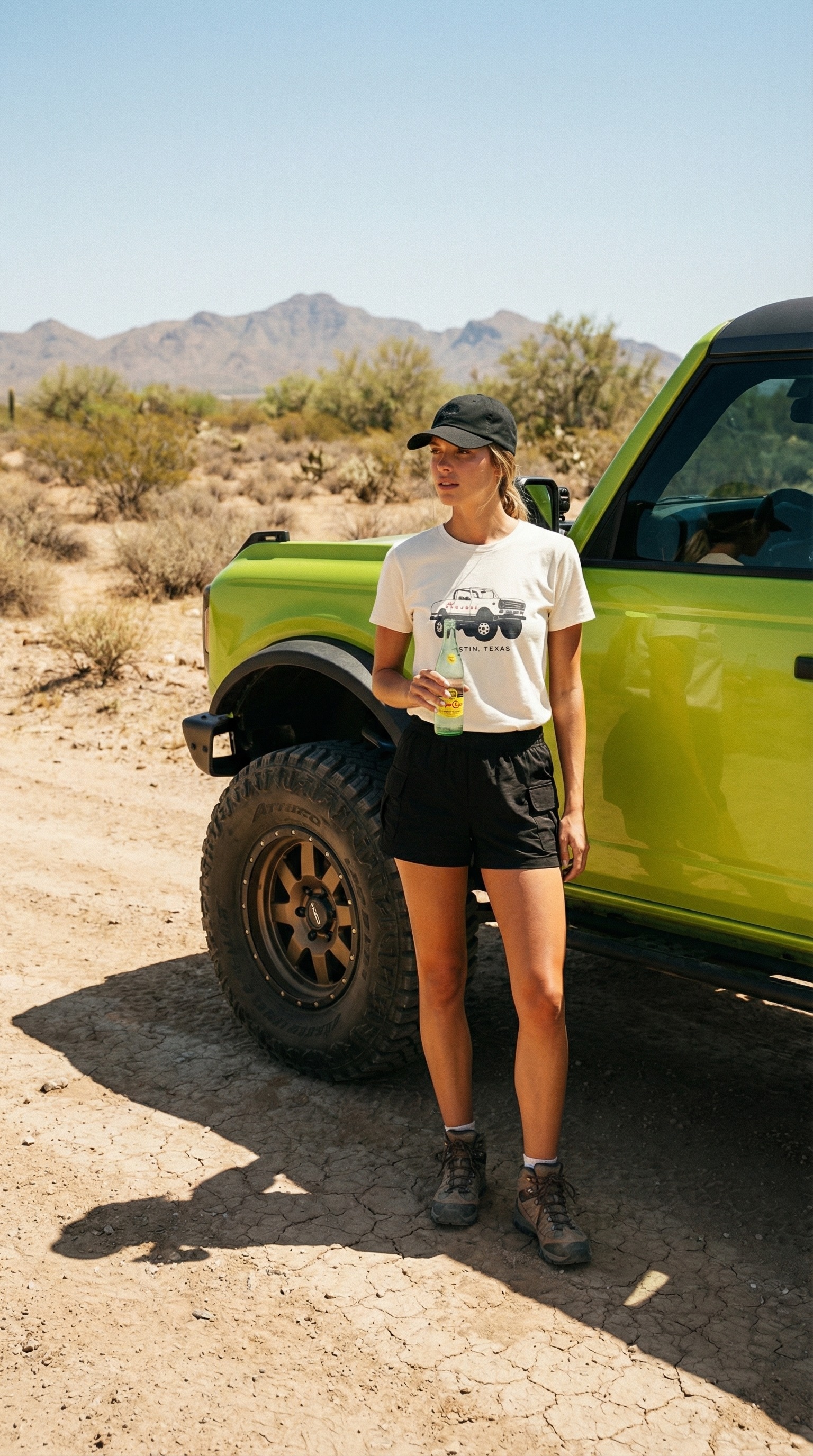
She had borrowed the Bronco from a friend who restored vintage trucks for a living and had given it to her for the weekend on the condition that she not put it in a ditch.
She had taken it west. Not far west - west enough that the city was behind her, west enough that her phone had stopped registering as in Austin, west enough that the road went from blacktop to caliche without anybody asking her to choose. She had stopped about an hour and twenty minutes out, somewhere past Dripping Springs and before the country opened all the way up, because the light had done the thing it does in Texas in late August where it tilts and goes the color of a coin.
She had pulled over. She had gotten out. She had stood next to the truck and drunk a mineral water that was warm by then and looked at a piece of country that did not care about her one way or the other.
Her t-shirt said Austin, Texas. She had bought it at a vintage shop on South Lamar four years ago, the year she had decided that Austin was a place she would never leave. She had worn it the way some people wear a wedding ring. Now she wore it on a Saturday in late August on a backroad ninety minutes outside of town, and she was trying to figure out if she was running toward Austin or away from it.
The job in Dallas had been mentioned twice. Once at a dinner in May, casually, by a friend of a friend who had said somebody you would like is hiring and not pushed it. Once again in early August, in a longer conversation, in which the person hiring had said something that had lodged in her like a small hook. He had said: I am not building a team. I am building a room. She had thought about that line for three weeks.
She did not need a job. Her clients were paying her well. Her routines were good. Her apartment was a thing she had chosen and lived in and grown into the way a person grows into a leather jacket - the bend at the elbows was hers now, the wear at the cuffs was hers. Austin had her shape on it.
But.
There was a but and she did not like the but. She had spent her thirties learning to honor the but, which her mother had told her once was the thing that knew before she did. Her mother had said the question itself is the answer; if you have to ask whether to stay, you are already half-gone. Her mother had said this in Spanish, sitting at a kitchen table, and Jayme had been twenty-three and had not understood it and had pretended that she had.
She understood it now.
She drank the mineral water. She looked at the green truck and at the green mountains in the distance and at the dust on her boots and she ran the math she had been running for three weeks. Dallas was the move that would make her smaller in the city she had spent a decade making herself bigger in. Marfa, when the new job took her there a few weeks a year, would be smaller still - a town of two thousand people in a county the size of Connecticut. She would be giving up a kind of visibility that she had earned. She would be trading a known room for an unknown room.
The man who had said I am building a room had not asked her to give up anything. He had just told her what he was making, and asked if she wanted to be in it.
She had not answered yet.
She had told everyone in her life that she was thinking about it. She had let her friends weigh in. They had mostly told her to stay. The Austin people had told her don't leave us, we love you here, this is home. The not-Austin people had told her do whatever's right, we trust you. Neither set of advice was useful. The Austin people loved her because she had built a life there that was easy to love; they were defending the building, not the builder. The not-Austin people were too far away to know what was at stake.
The truth was she had not told anyone the thing she was actually weighing. The thing was small and embarrassing and felt true the way truths do. The thing was: Austin had stopped surprising her. She knew every coffee shop. She knew every farmers market. She knew every face at every farmers market. She knew which paddleboard rentals at Lady Bird were oversold and which ones to call instead. She had stopped having mornings in Austin where she didn't already know what the morning was going to feel like.
That was the but. The but was that she was thirty-three years old and she had learned the city she lived in down to the texture of the napkins at her favorite restaurants, and she could not tell anymore if that was love or if it was sediment.
She drank the mineral water. She put the bottle back in the Bronco. She stood for another minute and watched the light keep doing what it was doing.
She did not decide that afternoon. The decision would come later, in October, in a different room, after another conversation. But what got settled on that backroad in August was the willingness to decide. She walked back to the truck different than she had walked away from it. Not because she had answered the question. Because she had stopped pretending she didn't have one.
She drove back into the city at sundown. She put the Bronco back in her friend's driveway with one full tank, the way they had agreed. She did not say anything to him about what she had been doing. She went home, and she sat on her back porch, and she watched the part of the Austin skyline she could see from her place do its evening trick of going from buildings to silhouettes.
She loved it.
She loved it, and she was leaving.
It would be another three months before she actually moved, and another six weeks after that before she stopped constantly checking her voice mails, and another six months after that before someone in Marfa would say something to her - quietly, at a fire pit - and she would realize she had not thought about Austin in two days. But all of that was downstream.
What was upstream was a Saturday in August, a borrowed green truck, an old t-shirt, a piece of country that did not need her, and a thirty-three-year-old woman who had finally allowed herself to admit that the question she had been refusing to ask was the answer she had been refusing to hear.
She got back in the truck. She drove east. She went home.
For now.
Prehistory is the archive of who these people were before the show found them. Image first, character second, the story is what sits in the gap between them.
Follow the showrunner. @galluccinet