The First Reading
beat_scene: outdoor_open, indoor_desk

Clark Edwards read the news item the way he read everything that mattered - once, quickly, without expression, and then set it down and did not look at it again. He'd learned a long time ago that the second reading was where panic lived. The first reading was just information.
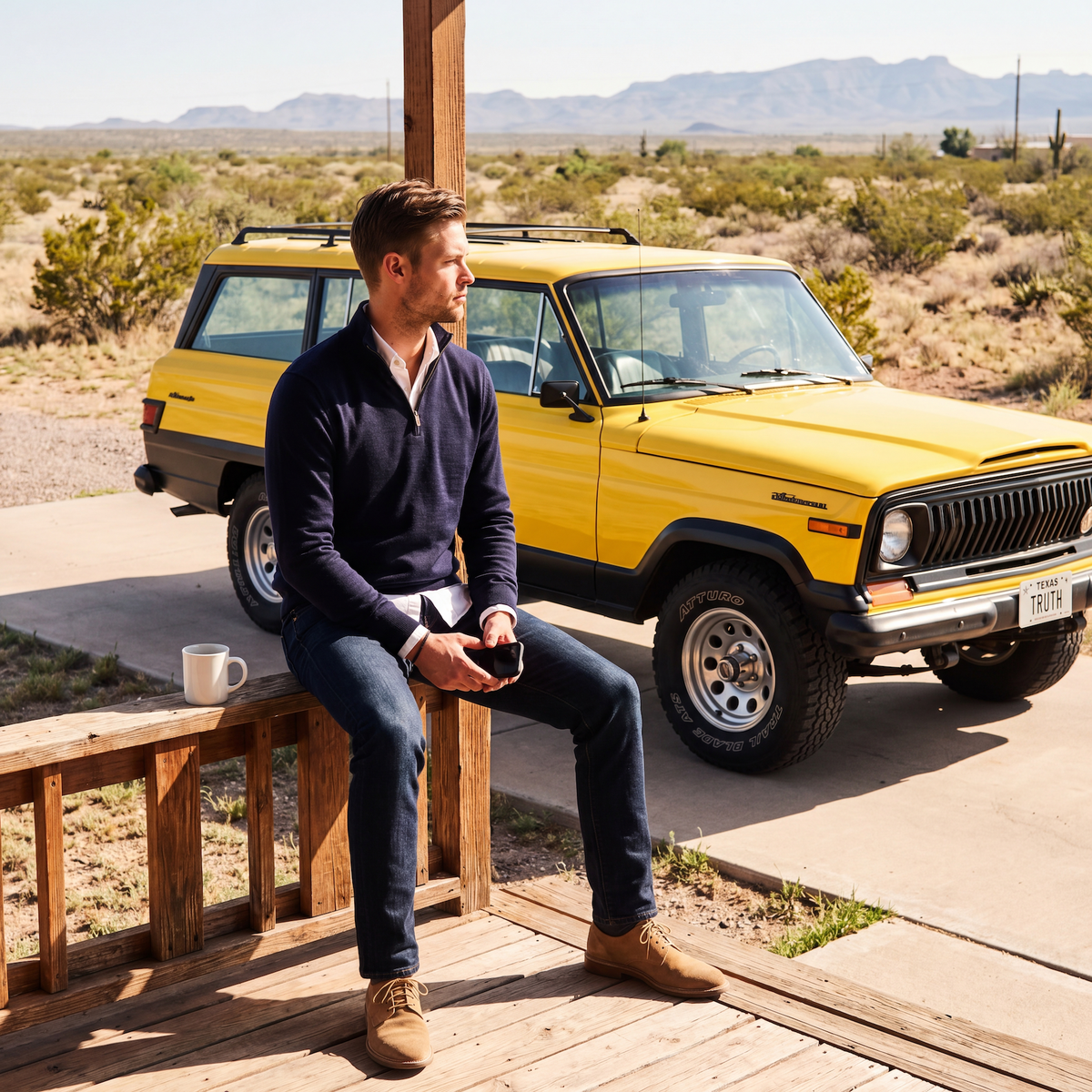
He was on the back porch of his house in Marfa, the Wagoneer sitting in the driveway with the weekend's dust still on it, a cup of coffee going cold on the rail. June coming in hot and still, the kind of Sunday that asked nothing of you and so revealed everything you were avoiding. He had been avoiding this particular thing for three weeks.
The article was short. A Dallas firm - boutique, creative, the kind of outfit that punched above its actual size the way good small agencies always did - had sold. Not to a client, not to a partner. To a holding company with an address in Charlotte and a portfolio that read like a list of things that used to mean something before someone figured out how to bundle them and sell them at scale. The firm's name was in the third paragraph. Clark didn't recognize it. He recognized the consultant.
The consultant had been in the Marfa office on a Tuesday in April. Cynthia's consultant, everyone had said, though nobody had asked Cynthia directly and she hadn't offered. He'd sat in the corner of the main room with a yellow legal pad and watched the team work for four hours and said almost nothing and left before lunch. Clark had watched him the whole time. Not because the man did anything alarming. Because of what he was doing with the legal pad, which was not taking notes in the way you take notes at a meeting but drawing something - boxes, Clark had thought, or a diagram, the kind of picture you draw when you're trying to see how the parts fit together.
The Dallas firm in the article had done a restructuring six months before the sale. The consultant's name was in the acknowledgments of the restructuring report, which was a thing Clark knew because he had, very quietly, looked it up.
He set the phone face-down on the porch rail next to the cold coffee. The desert was bright and merciless in the June light, the mountains sitting at their distance. He had a position on what was happening. He had not said it to anyone, not because he was unsure of it, but because a position said too early becomes a stance instead of a plan, and a stance was something you could be argued out of. A plan was something you built until it was load-bearing.
He was not ready to say it yet. He would need the week.
The Wagoneer was there if he needed it. He didn't need it yet. He picked up the coffee, found it cold, drank it anyway, and let Sunday be Sunday while he still could.
This entry is part of The Marfa Mavericks, a daily fiction podcast from The Marfa Strategy.
Listen daily. Apple Podcasts · RSS
Follow the world. @marfamavericks on Instagram · TikTok · X · Threads · Bluesky